Fall 2026 GrowthTech Summit: Recap and Takeaways
Three panels asked one question for 2027: is AI actually driving growth for advice firms? Mili closed the day with the ROI panel, where an advisor said Mili saves him about 1,000 hours a year.
At a glance
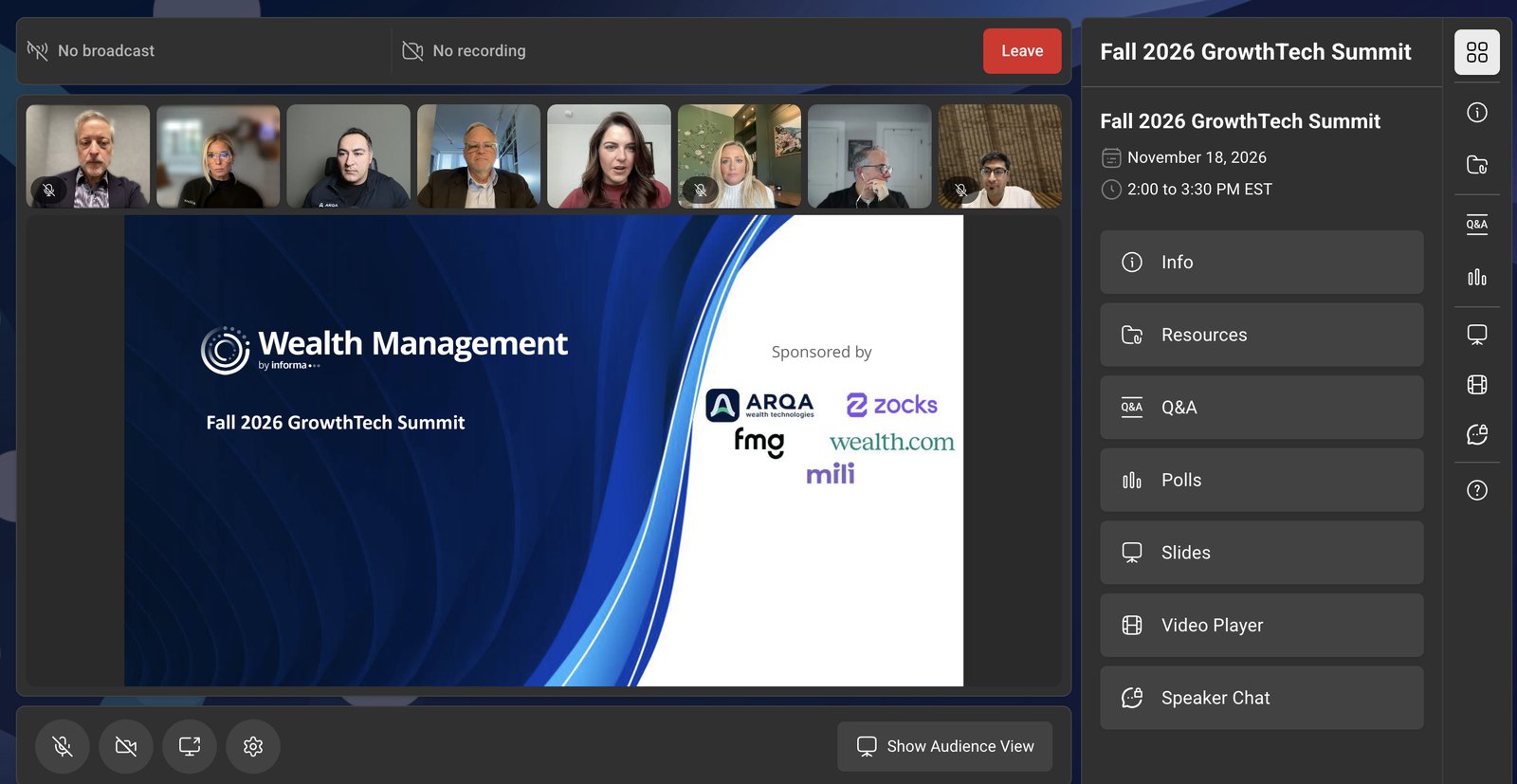
Shannon Rosick, Director of WealthStack Content Solutions at Wealth Management, hosted. Sponsors were ARQA, Zocks, FMG, Wealth.com and Mili.
| Panel | Speakers | Big idea |
|---|---|---|
| 1. Leveraging AI for scalable growth | Haik Sahakian (Co-founder and CEO, ARQA), Jim Hardiman (EVP Product, Zocks) | Start with one workflow, then grow. Time saved is where it starts, not where it ends. |
| 2. Connecting with next-gen clients | Samantha Russell (Chief Evangelist, FMG), Eva Denise (Enterprise Sales Manager, Wealth.com) | Earn trust before talking money. Estate planning opens the door to the kids. |
| 3. Workflow automation ROI | Chirag Gandhi (Co-founder and CEO, Mili), Nathan Weigel (Advisor, United Capital Management) | Measure AI by client capacity, speed to advice and team ratio, not just hours. |
Audience polls
- Biggest obstacle to winning next-gen clients: 42% said building trust and showing value. Reaching them came second.
- 60 to 70% of attendees already use some kind of AI meeting notes.
CE credit
The session counts for 1.5 hours toward the AEP designation. The Investments & Wealth Institute accepted it for 1.5 hours toward CIMA, CPWA and RMA. Instructions are in the resources panel.
Panel 1: Leveraging AI for scalable growth
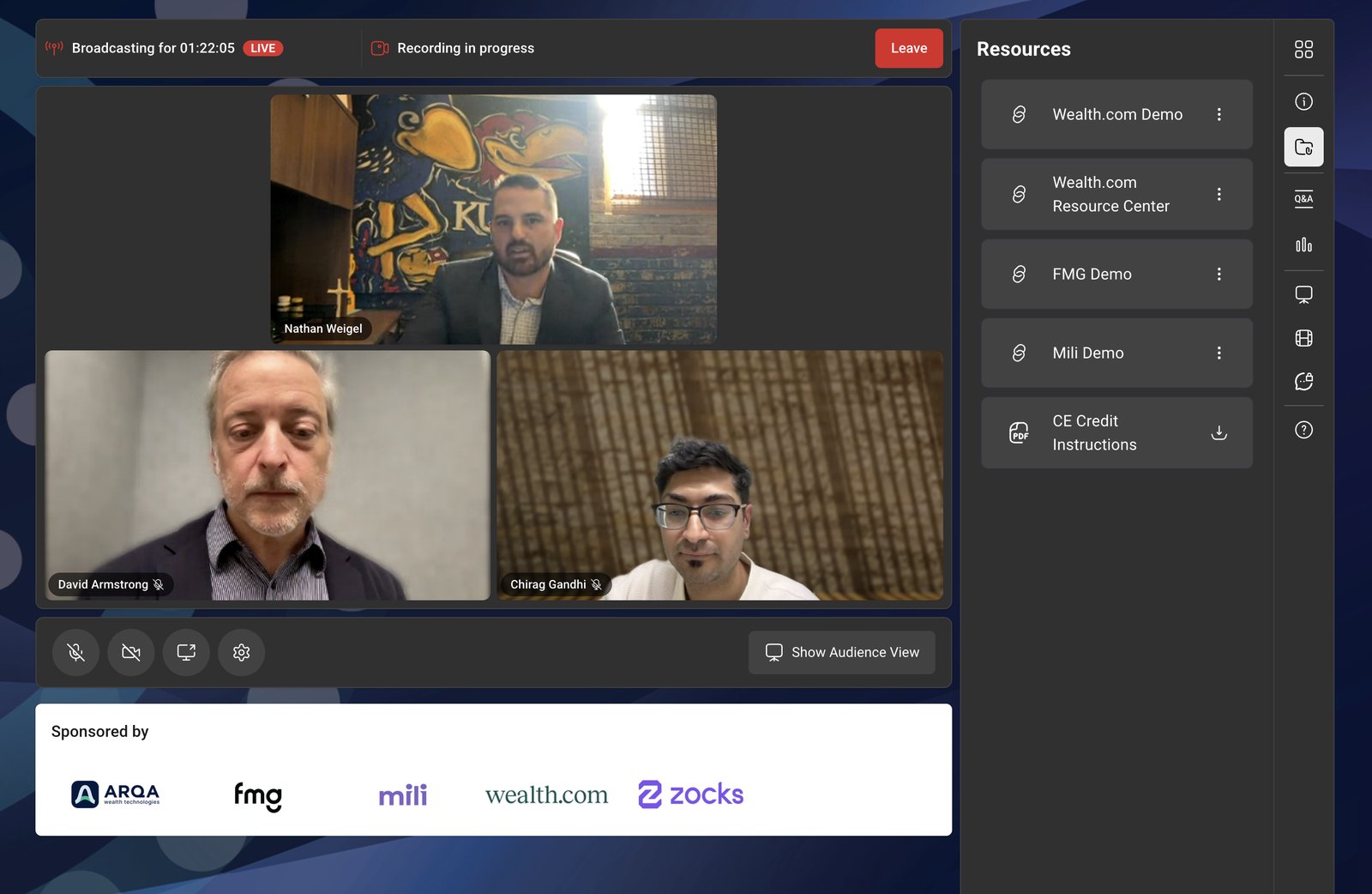
ARQA and Zocks agreed: firms get the most from AI when they start with one workflow and grow from there.
Who they are
- ARQA links the systems a firm already pays for, so AI agents can do work across them. Its view: 80% of operations work is the same at every firm, and 20% is each firm's own rules and approvals.
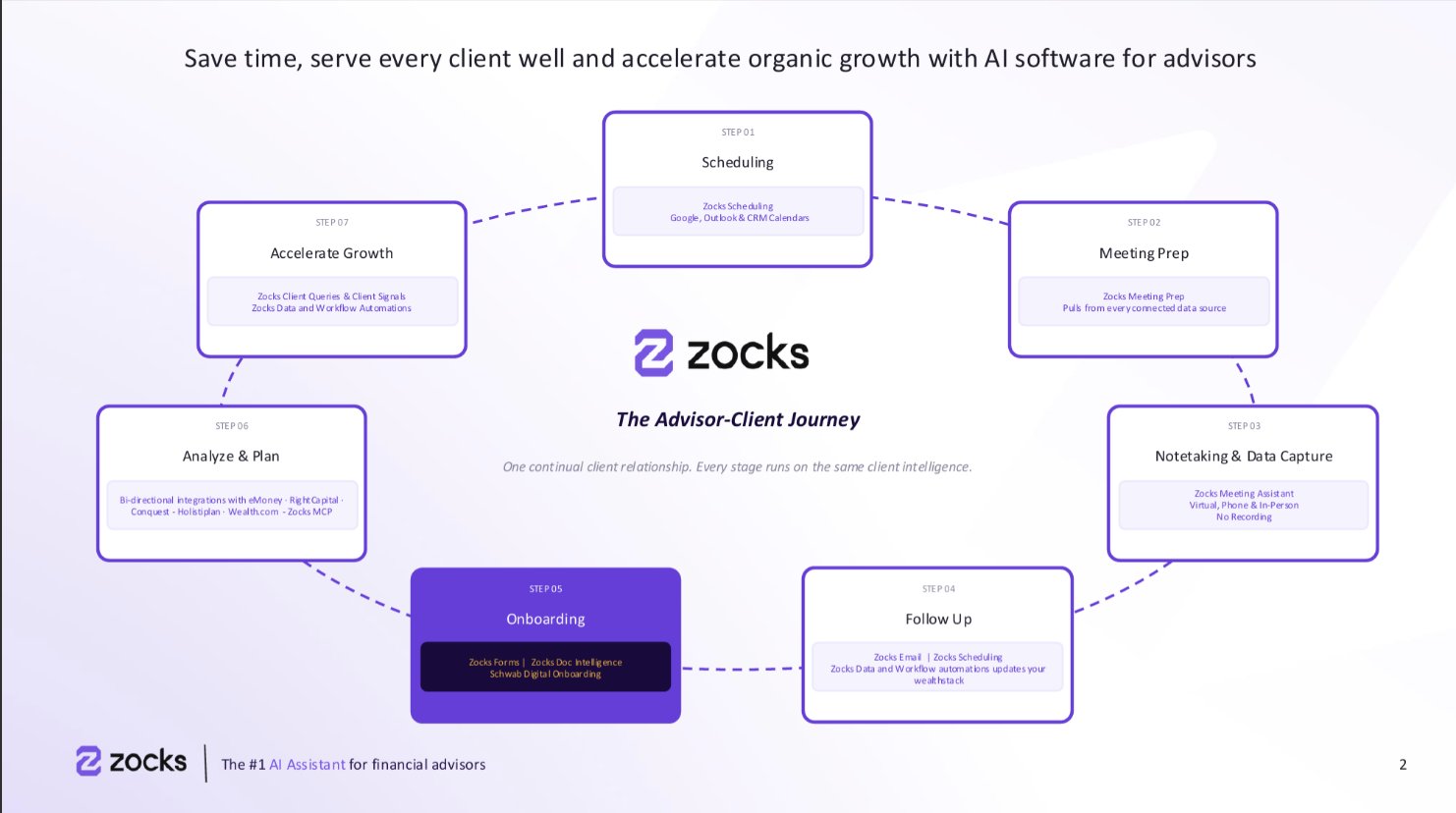
- Zocks covers the full advisor-client loop: scheduling, prep, notes, follow-up, onboarding, planning and growth. It has nearly 50 two-way integrations. It is "API first," so some enterprises run it "headless" behind their own screens.
Key points
- Fit is about complexity, not AUM. A 5-person firm with many systems can need help more than a large, tidy one.
- Adoption is still early. A Wealth Management study of about 450 firms in March found only 16% had an AI agent running in production.
- The gap is widening. Firms that have used AI for a few years now mine their data for growth. Newer users are still focused on saving time.
- Start small. Skip the big AI transformation. Pick one process, one task or one user, then expand.
- Skip the jargon. Haik boiled it down to four questions: What can the AI see? What does it understand? What can it do? Who controls it?
- Keep people in the loop. Anything client-facing, or anything that becomes advice, needs tight controls. Low-risk back-office work can run on its own.
- No data lake needed first. Clean data matters more than fancy data setups. Most of what you need already sits in your CRM, custodian and document systems.
- Vendors can work together. At one shared client, Zocks keeps a living client profile from every meeting. ARQA then uses it to open accounts at several custodians.
Results Zocks shared
- One firm saves nearly 2,000 hours a year on prep and follow-up. Its lead planner no longer sits in every meeting, and plans now start earlier, in the prospect stage.
- Another firm planned to hire 3 to 4 people. Instead it grew new assets 18% with no new hires, and added deep tax planning as a new service.
Looking ahead
- Haik pushed back on measuring AI only in minutes saved. The real question is what better work that time buys.
- He sees AI as an equalizer, like cloud computing. The winners won't be the biggest firms, but the ones that learn to use it well first.
- Both agreed AI should take the "swivel chair" data entry off advisors, so they can spend time face to face with clients.
Panel 2: Connecting with next-gen clients
Younger clients want proof of value before they hand over money. They also expect speed, and help with their whole financial life.
Who next-gen really is
- Think a 40-year-old with an equity event, not a 23-year-old on TikTok. Many have only ever found businesses by researching online.
- They are skeptical of big institutions and overwhelmed by conflicting advice online. They expect an advisor to prove value first.
Marketing that reaches them
- Write like people talk. Nobody types "holistic financial planning" into ChatGPT. Aim for a 7th grade reading level. Most advisor marketing reads at 11th grade.
- Use your own meeting notes. AI note-takers can show the exact questions and words your clients use.
- To get recommended by AI search: a clear ideal client, proof of authority (awards, podcasts, articles), and social proof (credentials, reviews). Samantha's magnet analogy: if you try to attract everyone, AI sends no one.
- Digital presence decides if you ever meet them. Performance keeps clients. Your online presence gets you the first meeting.
Where the experience falls short
- Speed: a brokerage account opens on a phone in 10 minutes, while many advisors still use a 3-week paper process.
- Scope: their money life is income, mortgages, equity comp and "who takes care of my kids," not just investments.
- Continuity: advisors lose heirs because they never meet the next generation.
Winning the heirs
- Estate planning is the door. Showing a family their trust as a simple flowchart leads to a family meeting, then to the adult kids.
- A 90-day plan: days 1 to 30, map the parents' estate. Days 30 to 60, hold a family meeting. Days 60 to 90, meet each child about their own goals.
- Ask the parents first. Learn what matters to the kids, then get a warm introduction by text or email.
- Lead with help, not money. Helping a 20-something negotiate equity in a new job beats any portal or investment talk.
- Don't overwhelm. FMG lets advisors send email sequences with delays, and offers a ready-made family meeting template.
- Make it personal. A short video sent to one client's child does more than a mass email.
AI and authenticity
- People don't mind AI help. They mind generic messages that clearly weren't made for them.
- Use AI for the busy work, like meeting recaps, and add the personal touch only you can.
- When a client says "I just use ChatGPT": agree, then show what it misses. AI answers the questions you ask. An advisor answers the ones you didn't know to ask.
- What the advisor adds: context, judgment and accountability. You call your advisor, not ChatGPT, when it's a hard moment.
- Ask yourself: would a younger client want to work with your team? If everyone is 30 years older than them, consider hiring younger advisors.
Panel 3: Workflow automation ROI
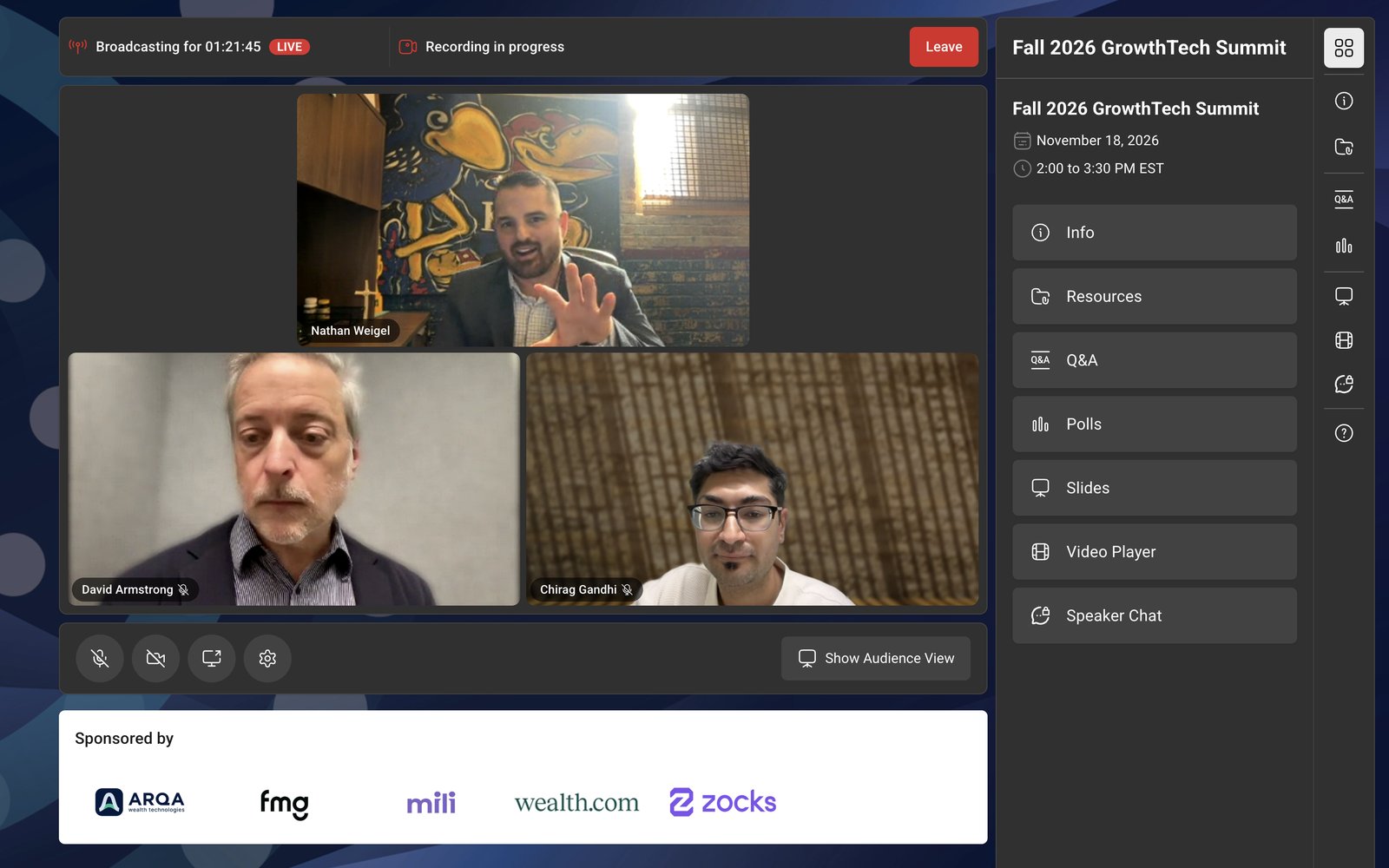
Nathan shared how much time Mili saves him. Chirag laid out three ways to measure ROI.
About Mili
Mili builds AI agents for advice firms, like an AI workforce working alongside the team. They handle meeting prep, onboarding, tax planning, data management and more. Hundreds of advice firms use it today.
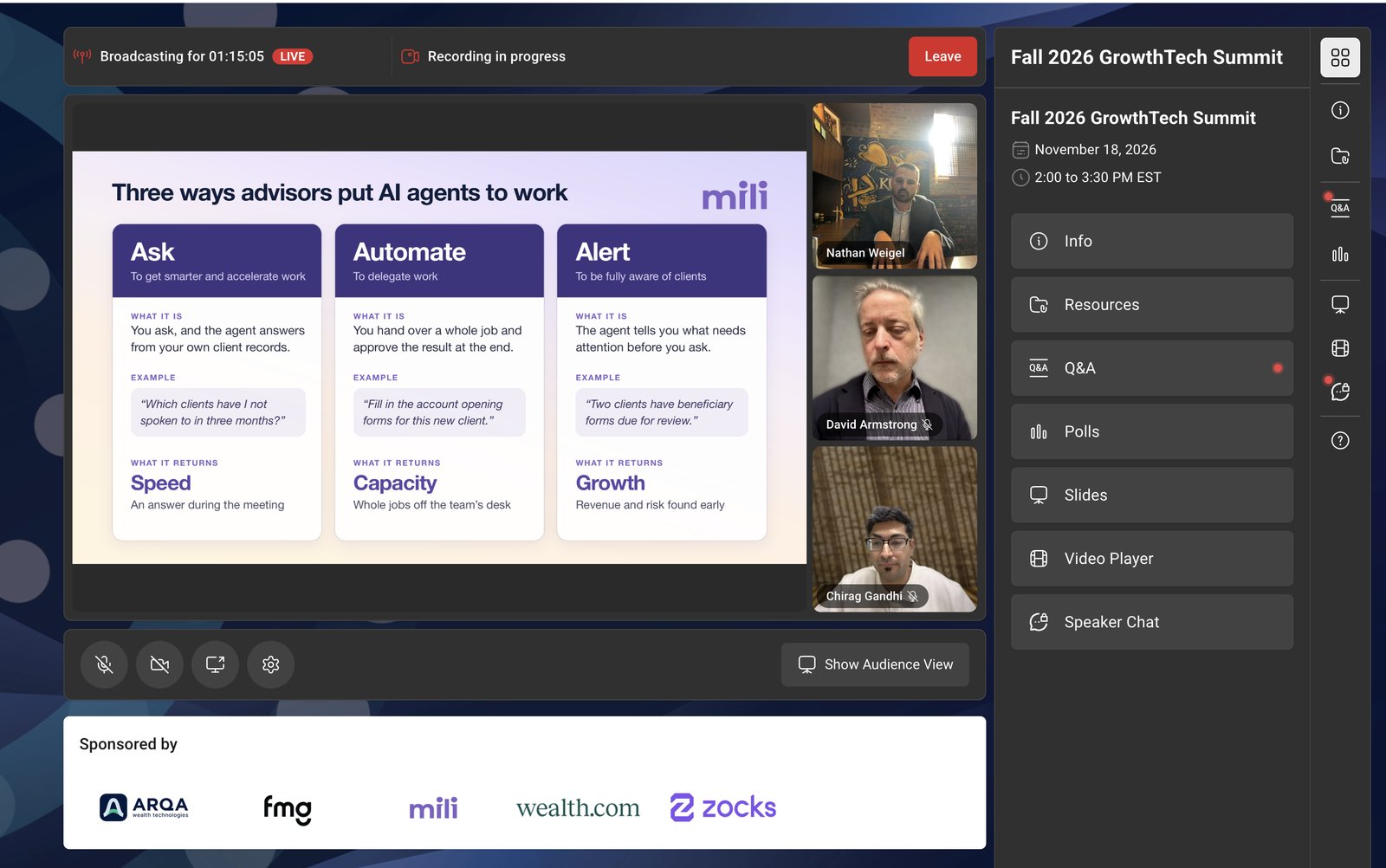
- Ask for speed: "Which clients have I not spoken to in three months?"
- Automate for capacity: "Fill in the account opening forms for this new client."
- Alert for growth: Mili flags things like a 20% stock drop or beneficiary forms due for review.
What Nathan said, as a working advisor
- He used to take notes by hand and rush to the next meeting. Now he stays present, and can recall a meeting word for word hours later.
- Prep surfaces life events, like a new grandbaby or a trip. That gives him something personal to ask about.
- He leaves each meeting with 6 or 7 tasks: who said what, and who owns the next step. Sometimes he shares next steps before the client leaves.
- He makes client-ready Excel and PowerPoint work quickly, though he's "not an expert" in either.
- Mili built a mind map for a brother and sister thinking of moving in together. His boss asked who made it. A beneficiary visual also got praise from the client's attorney.
- He spends the saved time on prospects and Roth conversions, not golf.
- He still serves long-time clients on Social Security, while giving business owners deeper tax, succession and estate planning.
- On wealth transfer: you have about 90 days, and 60 to 70% of heirs leave their parents' advisor. Being efficient helps him reach them in time.
- His firm is careful with client data and keeps strong guardrails. On Mili: "I just want to drive the car," not build it.
- His advice: find your 3 biggest bottlenecks and get on a call with a vendor. For about the price of a cell phone bill, you get help instead of hiring an assistant.
- On reluctant advisors: show, don't tell. A 10-minute demo won over one colleague on the spot.
Chirag's three ROI levers
- Client capacity. Firms report going from about 80 to 120 clients per advisor over the past year. It means people like teachers and veterans can get good advice too.
- Speed to advice. Delivering a plan used to take 1 to 2 months. Firms have cut that in half, heading toward weeks. Faster plans mean happier clients.
- Gearing ratio. Fewer support staff per advisor. The goal is helping everyone do their best work, not cutting jobs.
Other points Chirag made
- ROI looks different by firm size. Firms with 1 to 5 advisors want to avoid hiring an associate. Mid-size firms want to scale fast. PE-backed platforms want a higher exit multiple, from 10x to 20x EV/EBITDA.
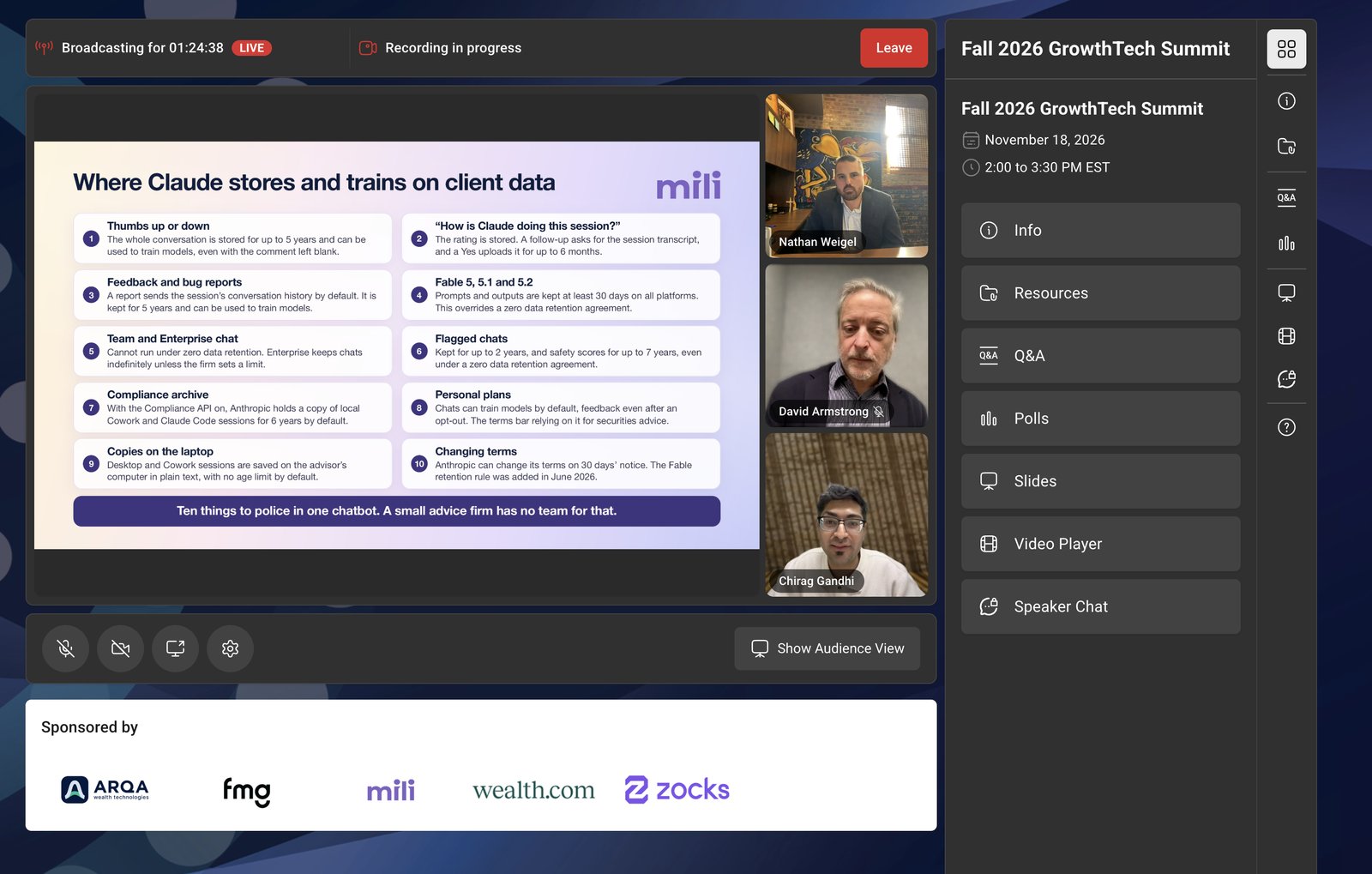
- Build vs. buy. A $20 chatbot is tempting, but it comes with many settings that can expose client data. Mili runs at a scale of a million agent tasks with strict zero data retention and no training on client data.
- An AI-native firm takes more than one tool. It needs data in one place, a shared vocabulary for agents, and rules for who can use which agents and data. His answer: partner, don't just build or buy.
- AI vs. older software. AI is still a tool, and the advisor owns the result. The difference is it's a black box: control the inputs, understand what it does, and set guardrails on the output.
- Closing thought: use AI to do more of what makes your firm you, whether that's acquisitions, organic growth or handwritten notes.
Audience Q&A
Attendees asked 15 questions. Some were answered on air. The rest were set to go to the speakers after the event.
- AnsweredIs this session archived? I'd like to share it with my network. Peter CoffeyYes. Shannon said the whole summit was recorded and is available on demand at the same URL.
- AnsweredOn data security, how are AI platforms different from the SaaS platforms we've used for 15 years? Should we think about AI vendors differently for access control, encryption and vendor due diligence? Trevor HicksChirag: AI is still a tool the advisor is responsible for. But it's a black box, so check three things: what data goes in and who can access it, how it works, and what guardrails sit on the output.
- Not coveredYou showed Claude. Why not ChatGPT or others? Peter Coffey
- AnsweredDo prospects, especially next-gen clients, avoid materials made with AI? Do they see advisors as less authentic if they find out? Mandy HabermehlSamantha and Eva: only when it's obvious and generic. AI help is fine if the message is personal and the advisor stays authentic.
- AnsweredWhat are the main obstacles in dealing and communicating with that generation? Thomas RavertSamantha: make sure your firm is one they'd want to work with, which may mean younger advisors. Eva: digital presence, and bringing estate planning in early.
- Not coveredHow many of you follow "finfluencers"? Don Samoil
- AnsweredThe sound is bad and the session keeps cutting out. Are others having this problem too? Lisa McCannShannon apologized for the audio issues at the close.
- Not coveredHow close are we to AI agents handling whole advisor workflows on their own, from onboarding and data gathering to portfolio analysis and ongoing client engagement? Mary Shahzadeyan
- Not coveredCan you repeat those AI questions? Caira White
- Not coveredAre deep, API-based integrations that create one unified experience what we should all be aiming for? Peter Francescutto
- AnsweredWill there be a transcript so I can search for keywords and see when they were discussed? Evan MurrayThe recording is on demand. A transcript was not mentioned.
- AnsweredWill this webinar be recorded for later, and will it include a transcript? Evan MurrayRecorded, yes. A transcript was not mentioned.
- Not coveredDoes this qualify for CFP CE? Mark MantayOnly AEP and IWI (CIMA, CPWA, RMA) credit was announced. CFP was not mentioned.
- Not coveredIs this approved for CFP CE? I don't remember entering my CFP number. Larry Rabinowitz
- Not coveredHow do I add CE for CFP? Thomas Beattie
Closing thought
Shannon summed up the day: growth isn't about adding more tech. It's about making the tech you already pay for work harder for your business and your clients.